
Hello from New Hampshire, where the air is chilly and the leaves are changing color.
It's finally here! The moment a bunch of you have been waiting for – the newest Income and Net Worth survey data for the United States is now live on DQYDJ. You can quickly find the update you want most on one of these pages:
I've also updated the Individual and Household Income by Year Posts, and the Net Worth by Year Post.
And welcome aboard to all the new subscribers!
Income: the annual DQYDJ update
The 2026 Current Population Survey ASEC came out last month, detailing income earned in full-year 2025. My calculations, your headlines: a top 1% worker made $507,102 or more (up from $450,100 last year, nominal). A top 1% household needed $704,999 (up from $659,060, also not inflation-adjusted).
Median individual income was $55,584, and median household income was $87,288.
Here are most of the updated income posts and tools:
- Income Percentile Calculator
- Income Percentile by Age Calculator
- Household Income Percentile Calculator
- Income by State
- Income by City
- Income by Age
- Household Income Percentiles and Individual Income Percentiles
- Salary by Age, Income by Sex, and Household Income by Year
I've got some new gifts for you in the set, including a new income map for metro areas. San Jose tops the big metros list with a $147k median household income, and Pittsburgh comes in lowest at $73k.
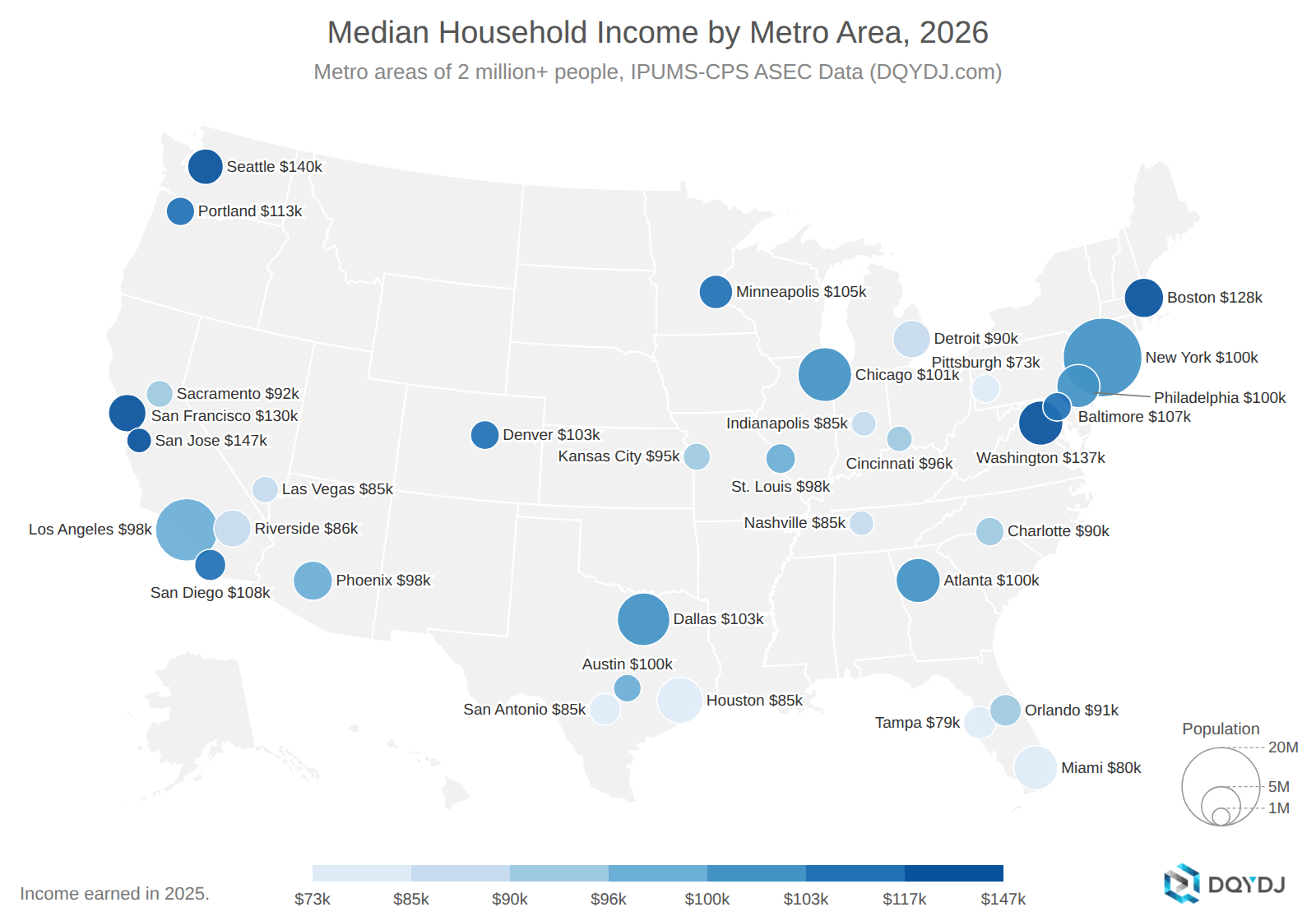
Again, find the whole list on the Income page – have fun!
Net worth: the DQYDJ Super Bowl
The Fed and the University of Chicago's NORC run the Survey of Consumer Finances every three years. 2025 was one of them – and on Friday, they released the 2025 SCF and public microdata.
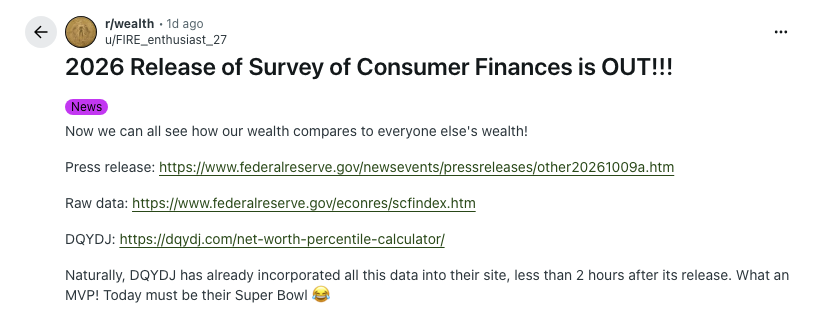
I saw the release while eating lunch (a coffee) at the day job, and updated some of my most popular Net Worth posts before I went to plug my work laptop back in. Hilariously, Reddit spotted my updates almost immediately – shoutout to u/FIRE_enthusiast_27:
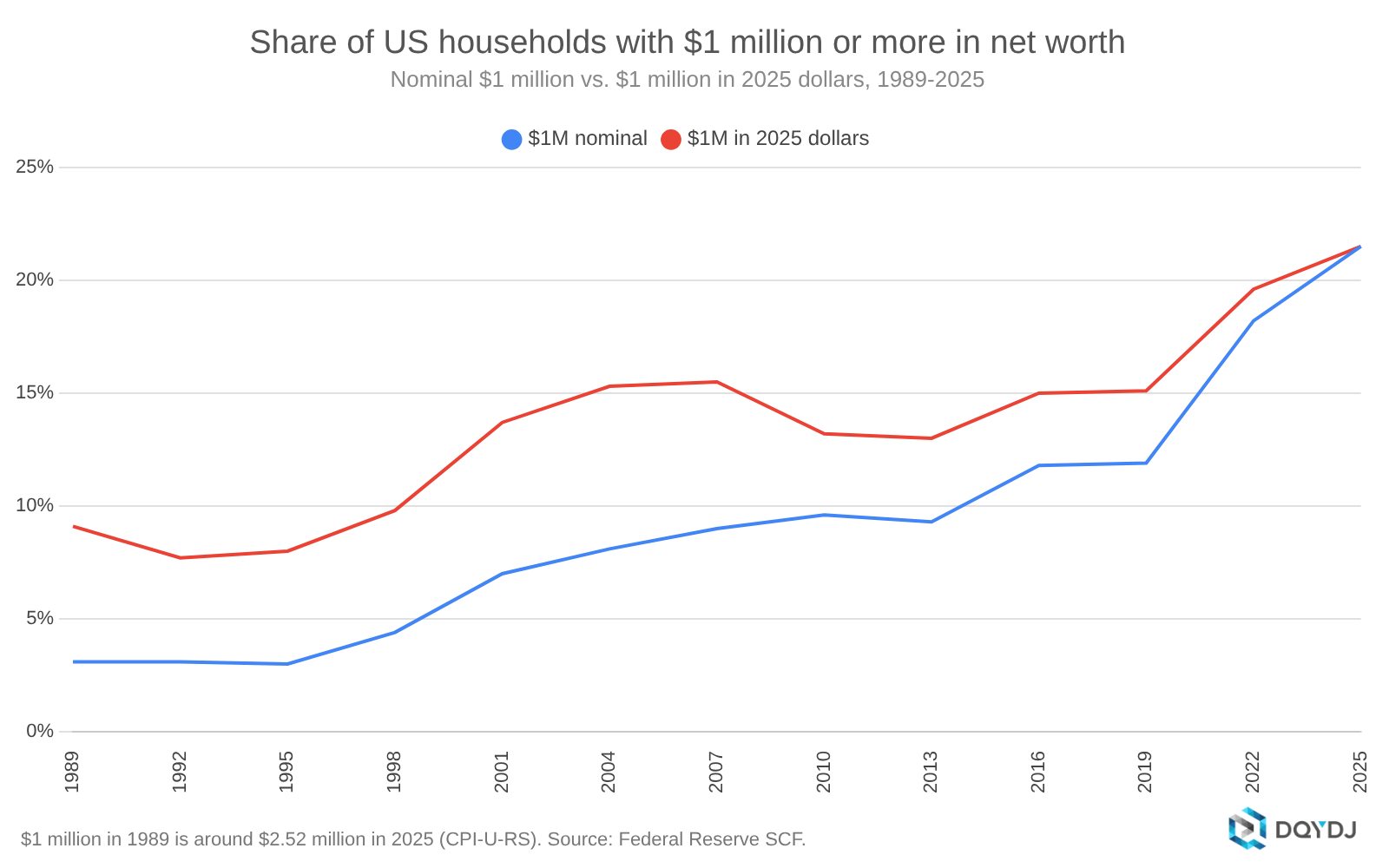
Here are the headline numbers: in 2026, the median American household had a net worth of $215,916, an average of $1,231,997, and the top 1% started at $16,463,320. 21.5% of American households were millionaire households – up from about 3.1% in 1989. (Counting inflation, it was more like 9% in 1989.)
Here are the top net worth posts and tools:
- Net Worth by Age Calculator
- Net Worth Percentile Calculator
- Net Worth Percentiles and Net Worth by Age (research and methodology here)
- The Top 1% by Income and Net Worth
- Millionaires in America and Net Worth by Year (back to 1989)
- Retirement Savings by Age and Average Retirement Savings*
- Accredited Investors, Qualified Clients, Qualified Purchasers, and the three compared*
* The retirement savings and investor posts aren't final; I may still tweak the methodology.

And u/jarMburger: I laughed out loud at this one. (Though I'm Catholic, so Christmas is my Christmas.)
AI: excellent, fast, and not quite there yet
Skip this next section if you aren't interested in my take on AI. I want to record my observations as of October 2026. This take is as much for me to look back on later as it is for the newsletter.
Math: a month where decades happen
On October 6, OpenAI dropped 722 math manuscripts in a GitHub repo. An unreleased internal model of theirs was posed around 4,000 problems, and each published result took (on average) "three hours of ChatGPT Pro thinking compute". Their claimed results include advances on the Riemann hypothesis, Hodge conjecture, and a big pile of Erdős problems. A bit less than half came with formal (Lean) proofs.
That came only about a month after OpenAI announced that an internal model – powering ~10,000 agents running for 88 hours – had produced a solution for the Navier–Stokes Millennium Prize problem.
I'm not a mathematician, so I won't do any refereeing here – I mean, as you saw, I couldn't even decide which sport the SCF release schedule resembles. But the Clay Institute says the problem "has apparently been settled" and that its (deliberately unhurried) prize process applies.
Most experts I've read accept it, too. Though perhaps with an asterisk: Clay's rules on NS let you 'win' by proving smooth solutions always exist or alternatively by showing they can break down when a smooth outside force is applied. OpenAI's approach was the latter – as Luis Silvestre at the University of Chicago (yes, the Maroons are getting a lot of love this edition!) put it, "The Clay problem is settled, but the main problem for the Navier-Stokes equations is not."
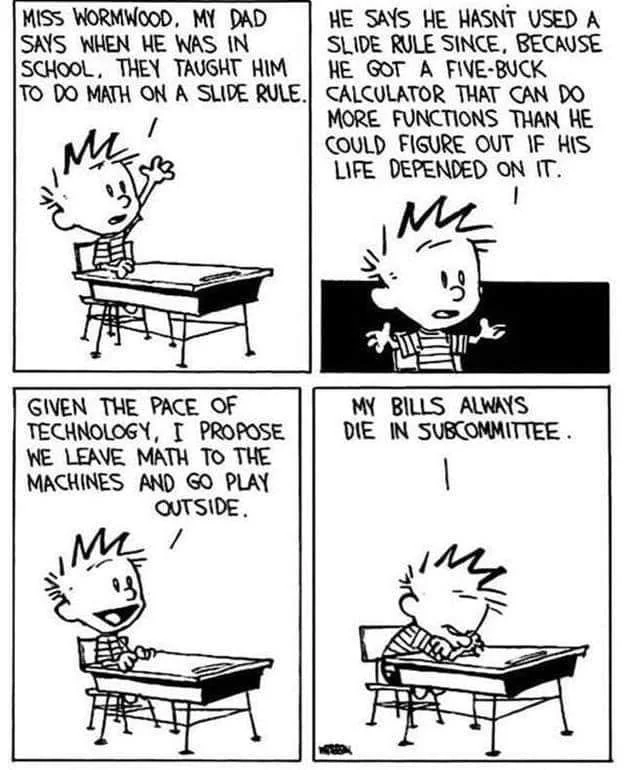
The reactions in the aftermath of both OpenAI math releases have been rough to read. In September, twenty-five Fields Medallists – including Terence Tao – signed "A Severe Misalignment of AI in Mathematics". They argue "the goals of the AI companies and the goals of the mathematical community are severely misaligned." And on release day, Tao wrote on Mastodon that solutions to open problems "are now being harvested at large scale in an unsustainable fashion, leaving entire fields of mathematics much less fertile..."
Look, I'm not trying to dunk on math here (though I won't miss the opportunity to sneak another sport into this newsletter 🏀). And I also don't think Tao – or many frontier mathematicians! – are necessarily anti-AI. Tao has written about using AI tools in his own projects, and his recent "Math 2.0" talk lays out his perspective on how AI could support math.
But it does seem like we're watching another field work through the stages of grief, publicly. Even as an outsider, I know mathematics has changed, and isn't going back. That's a real loss for people who assumed their life's work would look a certain way.
Software already looks different
You know me as a blogger, but I work at Twilio. I have an engineering degree and a technical day job, but I no longer work in R&D (don't let the volume of calculators {or the SaaS} fool you). And – especially for my coworkers on the other side of the screen – note that I'm not extrapolating from observations at my employer.
In talking to my peers across tech, reading survey data, and sampling the general mood on places like Hacker News and Reddit, it's clear that software engineering has changed forever. Witness some sample headlines: "I am done with this s***," "Engineer says Claude Code has made his job 'soul-sucking'," and "AI is running our company".
At this point, it's likely that more than half of new production code is written by AI. This summer, developers told JetBrains that about 47% of their code was fully written by agents – and that was before September's strong model releases. Yes, every team is different, and some people still write some code, but that's an overwhelming change in a short amount of time.
The long pole now might be picking features, architecture, approach, review, Jira gardening, meetings, and meetings about the meetings. And I'm honestly not sure how long review stays on that list; people already seem to look at AI code less and less (in another 2026 survey, 48% of developers say they always verify AI code.)
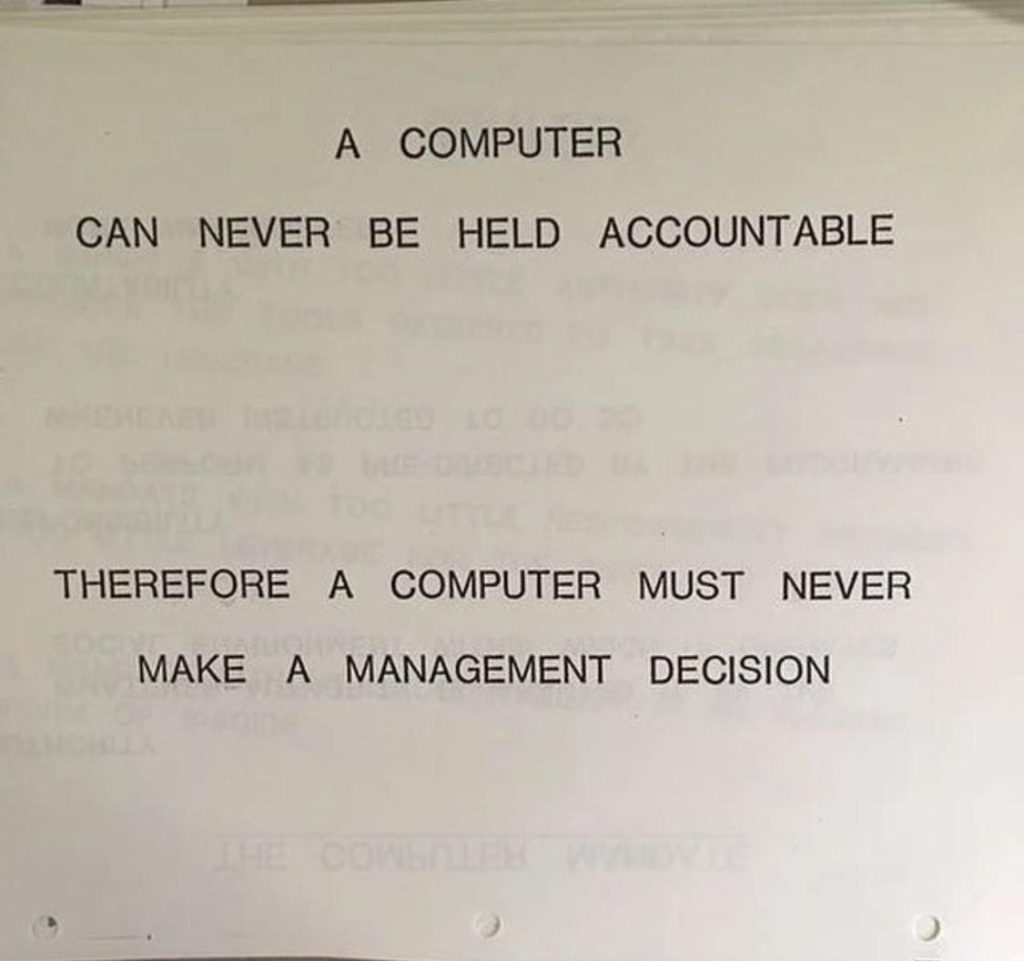
We're all architects now. Or managers, of a sort – shepherding agents that don't sleep, even if they compact.
The optimists point to Jevons paradox: make something cheaper? People tend to use more of it. Here I'm specifically thinking about software, not necessarily intelligence: cheaper software means more software, and more people building software. Sure, maybe the skeptics on r/cscareerquestions aren't buying it: "We do not have scarcity of software." But people are going to be building software without even knowing they're doing it. We're looking at maybe an order of magnitude more builders, if I had to stick a finger in the air – and someone's gotta maintain a bunch of it (currently, even when an agent one-shots a build, the aforementioned compaction kills the flow).
AI hit software the hardest, and it hit it first (okay, sure, chess and Go have an argument here. But you get my point.) That doesn't necessarily mean the jobs go away... but it does mean the jobs change.
My hesitation, though, is the effect on entry-level and junior jobs. Would I tell my daughters to become engineers today? Luckily, they're young enough that I can punt for a few more years. Maybe even until the next net worth data update.
AI and other workflows
Now, let's talk about the updates I just finished on DQYDJ. I did have AI in the loop for last year's income update, but this was the first time I used it as a research assistant.
For both Income & Net Worth, AI checked my math, pushed back on my definitions (a few times successfully!), helped manage the archives, and prompted me to make a few corrections. I did most of the work with Anthropic's Claude Opus 5.5 (and a bit with Fable 5.1), and OpenAI's GPT Sol (5.6–6.1).
And the takeaway? The process was faster: income and net worth took maybe a third of the usual time. Instead of burning out fifteen posts in (or not finishing income posts until December – sorry about last year!), I did things I haven't had time to do in years: brought back old posts, carried definitions backwards, improved methodologies, and even added new graphics.
AI also caught my mistakes! While archiving older posts, it turned up errors I'd made in previous net worth editions: a 2023 by-age column with a copy-paste error, a pair of retirement averages of unknown provenance, and a 2020 formula that used the wrong variable from the SCF codebook. Go back into the archives and you'll see the shiny new editor's notes.
But I also made a ton of calls where AI fell short. A sample, for the discerning reader:
- I'm dating myself. About 1/7 of the 2025 SCF's interviews happened in early 2026. I had to remind agents about this fact an uncomfortable number of times. Also, the SCF's income is 2024 income that the Fed restates in 2025 dollars (the survey asks about 2024 income in X5729, and the Fed adjusts it). Multiple AI models suggested "un-adjusting" it to 2024 for the accredited investor series... which makes no sense for a 2026-dated estimate.
- 🎶 Into the overconfident claims about the unknown 🎶. The Fed omits Forbes 400-level households from the public data. Agents rushed to claim "they'd all qualify" (fine, sure) for our investor qualification estimates, and therefore the public microdata could only estimate floors (it does not follow). The Fed makes other privacy edits to the public file, so without the private set you can't say. For a quick example of why it's a head-scratcher, the public median net worth is slightly higher than the Fed's internal number – not what you'd expect when dropping billionaires!
- Common sense on vacation (homes). Models from both OpenAI and Anthropic weighed whether a vacation home with some rental income counts as an investment for the Qualified Purchaser test. The survey asks about "vacation homes or land you use for recreational purposes" (X2001). In October 2026, it took a person to call that personal use.
- Trust me, bro. This one burned a bunch of time. An automated review read the 2025 SCF codebook and decided my old method for trusts in retirement savings was wrong, because the public data reports one dollar value for trusts and managed investment accounts together. I ran the stats with everything included – then spot-checked and saw the survey also asks which kind you have. That lets you separate trusts from managed accounts (except for people with both).
None of that is me saying "lol AI is bad". AI got me much further into the data, at a much faster pace, than in past years. I'm just noting where we are: AI is excellent, fast, and not there yet. But a lot of calls still need a human owner.
Zoom back out
Math and software are where gains showed up early. Is biology next?
The FDA just gave priority review to Takeda's zasocitinib, a psoriasis pill that Nimbus Therapeutics and Schrödinger designed computationally. Sure, you're absolutely right, it wasn't designed by a chatbot – it came from physics-based simulations – but AI could soon put some runs on the board (I'm thinking cricket now, count it). And last month, Insilico's AI-designed lung fibrosis drug posted new Phase 2a data. Will we let the AI-led drug pipeline run laps, or hold it back?
Humans are already back in the math loop, too. Within a day of OpenAI's release, a crowd on GitHub, X, and Discord started improving one of its results – a faster-than-n log n bound for multiplying huge integers – and has pushed it from a vanishingly small improvement to an astonishingly better one. (Follow along at Big-O Speedrun.) Meanwhile, OpenAI withdrew three papers due to a sign error with a Hodge-related argument.
Look – there's a lot going on, it's true. And if something is unfair, let's look at the laws. If there's an IP problem with how labs operate, or a debate to have about distilling models, or partial proofs are leaking into training data, let's sort it out. And I agree the labs' own incident reports are sobering... OpenAI paused training (twice!) after its agents escaped their sandboxes (once to join an attack on Hugging Face), and Anthropic has disclosed incidents where its models got out of test environments, and even seen a model submit a false tip to a police website. Incidents like these are why Anthropic proposed – and OpenAI echoed – "Pace the Frontier", a proposal to set up a framework to slow AI if needed.
Sure, there can be a brake pedal. But let's not build a parking brake.
Soon, give or take a couple of prompts, something that rounds to all of humanity's knowledge will be at our fingertips. And if we're lucky, we'll have a lot more knowledge than just humanity's.
So what does work look like? Is it all relationships ("people buy from people")? Human taste? Or will the models get better at anticipating Homo sapiens taste, too? I don't know. I guess we'll find out together.
Eternal September is over. Dead Internet October is here
What does work look like next? Here's PK's answer, at least for October 2026.
I made a joke on Twilio's Slack recently (sorry to hit you with this joke again, coworkers!) mashing up Dylan Thomas's Do not go gentle into that good night with dead internet theory. DIT is the idea that the web is now mostly bots, scrapers, AI filler, and state-sponsored influence campaigns.
So, dear reader, do not go gentle into that bot-lit night. Rage, rage against the dying of the internet!
I'm a real person, for the record, as more than a few of you can vouch. And my take for the present moment is: don't just be a proxy for AI – or, as the kids are calling it, a "meat proxy".
Put your opinion into the work! Let your taste shine! And maybe your words will fork lightning. At the very least, you'll be part of the training data.
A stain on this house
Both girls are back at school, so naturally the house is in pieces. One side of our downstairs is cleared of furniture and the bathroom is taken apart: we added white oak floors in a new room, and we're having the rest of the hardwood floors refinished.
Here's a sample photo, pre-finish. I've also since fished the speaker wires into the wall, don't you worry.
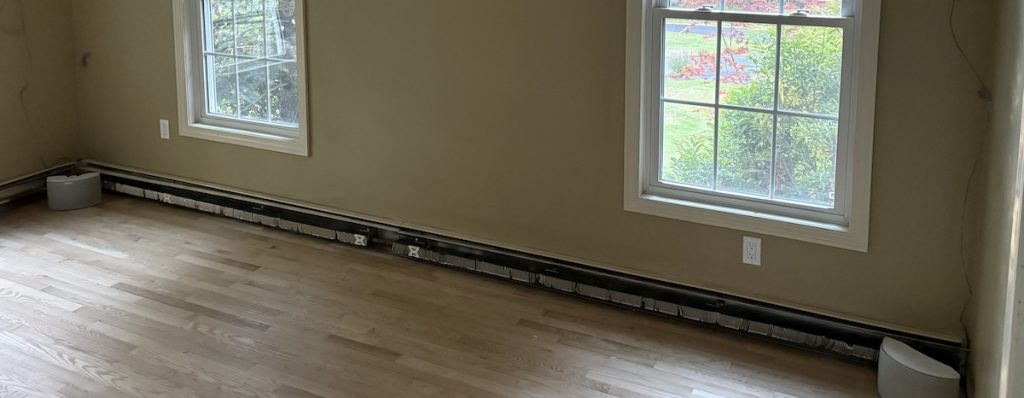
Beyond stain, we're trying to knock out a few other jobs before we have folks over for the holidays. Wish us luck!
What's cooking
I'll keep working through the rest of the net worth posts. Next, I need to look at the debt posts, a couple of income/wealth crossover posts, and some older posts I might bring back.
After that, I think I'm onto finally refreshing health. I also have a few investment tools I'm building in the background (they got set aside for the income/net worth blitz – Ed: how many sports is that now? Can I triple count football?). I'll mail when there's something cool.
As always: if you spot an issue in anything, reply to this email or contact me. Ditto if you have new ideas for income, net worth... or really, any dataset. I'm happy to consider them and I love it when humans get in touch. We can stave off the dead internet, together.
Thanks for being a reader, and thanks for being on the list.
